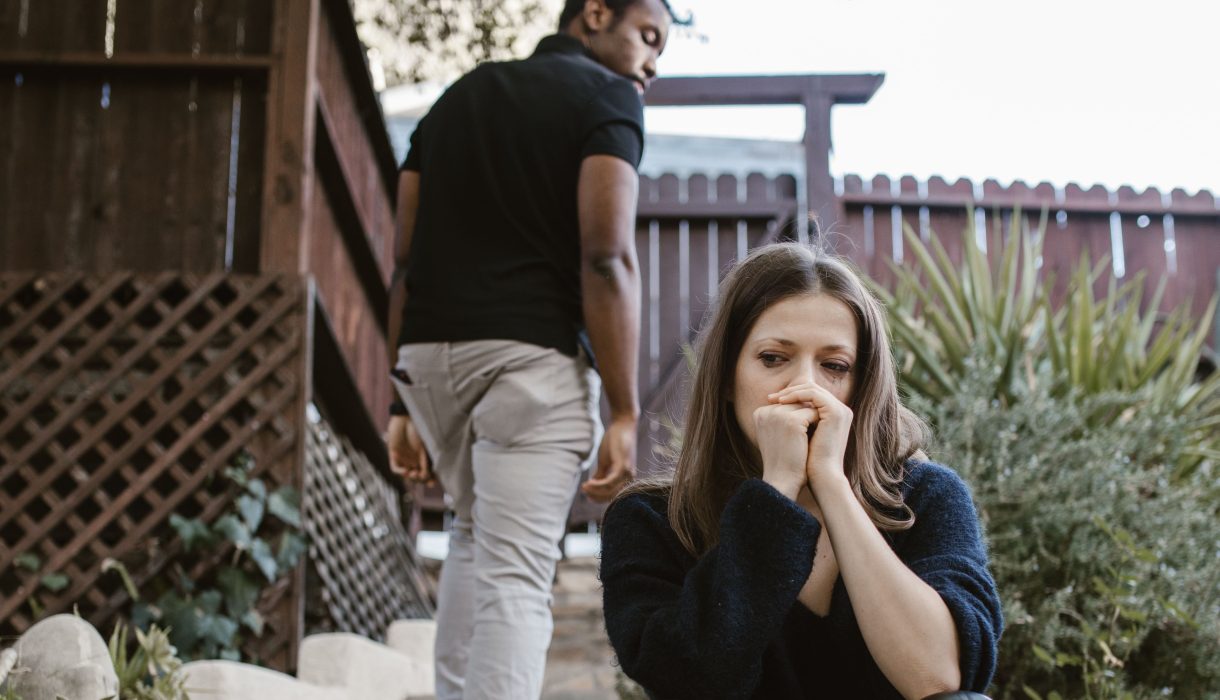

The last time I remember trying to save my relationship, I was sitting on the edge of my bed at eleven forty-seven on a Thursday night, rereading a message I had already read at least twenty times.
It was an ordinary message. Nothing cruel, nothing dramatic. Just a few words, followed by a period that somehow felt colder than anything he could have said aloud. I kept typing replies, deleting them, and starting again, searching for the perfect combination of words that might make him understand what I had been trying to say for months.
I told myself I was being patient. I was choosing love over pride. I was willing to do the difficult work that relationships required.
What I could not admit then was that I had slowly become the only person doing the work.
There is a particular kind of exhaustion that comes from loving someone while trying to convince yourself that the relationship still has somewhere to go. You become an expert in small details. You notice the shorter replies, the cancelled plans, the conversations that never quite happen. You learn to celebrate the smallest gestures because they offer temporary relief from a distance you cannot explain.
And because there are still good moments, you convince yourself that the bad ones are temporary.
The difficult truth is that relationships rarely end in one clean, unmistakable moment. Sometimes, they end gradually, through a hundred little withdrawals that neither person knows how to name. Sometimes, one person has emotionally left long before the other is ready to acknowledge it.
And sometimes, the person who stays longest is not the one who loves more. She is simply the one who has not yet accepted what the other person has stopped trying to repair.
When hope becomes your full-time job
For a long time, I believed that if I could understand him better, I could fix what was happening between us.
If he was distant, I tried to be more understanding. If we argued, I rehearsed how I could have explained myself differently. If he seemed unhappy, I searched for the thing I might have done to cause it. Every difficult conversation became an opportunity to examine myself, while his part in our unhappiness somehow remained untouched.
I mistook self-awareness for responsibility for everything.
I think many women are taught, subtly and repeatedly, to become the emotional managers of their relationships. We learn to anticipate moods, soften difficult truths, initiate uncomfortable conversations, and make room for another person’s struggles. These can be beautiful expressions of love. But without reciprocity, they can also become a quiet form of self-abandonment.
You begin to measure the relationship not by how it feels to live inside it, but by how much effort you are willing to invest in keeping it alive.
You tell yourself that every relationship goes through difficult seasons. That people get busy, that affection changes, that commitment sometimes looks less romantic than it once did. All of that is true. Love is not supposed to feel effortless every day.
But there is a difference between going through a difficult season together and being the only person trying to find your way out of it.
“I thought I was fighting for our relationship. Eventually, I had to ask whether I was fighting against the truth of what it had become.”
That question changed something in me, although not immediately. Knowing a relationship is hurting you and feeling ready to leave it are two entirely different things.
The silence that tells you more than an argument
One of the hardest things to recognize is that a relationship can look perfectly normal from the outside while feeling painfully lonely from within.
You might still have dinner together. You might still exchange photographs, discuss weekend plans, or laugh at something on television. Nothing has technically ended. There has been no final conversation, no dramatic betrayal, no obvious reason you can point to when someone asks what went wrong.
Yet you feel increasingly alone in the place where you once felt most understood.
You stop bringing up certain things because you already know how the conversation will go. You edit your feelings before expressing them. You begin to wonder whether asking for affection, clarity, or basic consideration makes you difficult to love.
The absence of conflict can feel like peace, but sometimes it is simply what happens when one person stops believing that speaking up will change anything.
I remember how easily I confused a quiet evening with a good evening. I was so relieved not to be disappointed that I stopped asking myself whether I was actually happy.
Looking back, I wish I had understood sooner that emotional safety is not the absence of difficult conversations. It is the ability to have them without feeling that the relationship itself is constantly at risk.
When someone is willing to work through a difficult period with you, there is usually some evidence of that willingness. It might be imperfect communication, uncomfortable honesty, or small but consistent attempts to change. It is not always graceful, but it moves somewhere.
When you are fighting for something that has already ended emotionally, you may find yourself having the same conversation repeatedly, making the same requests, and waiting for promises that never become action.
Eventually, you begin to feel less like a partner and more like a person applying for a position you already hold.
Why leaving can feel harder than staying
If a relationship makes you unhappy, why not simply leave?
I used to ask myself that question with a kind of impatience. I assumed that recognizing the problem should be enough to solve it. But love is rarely that straightforward.
You are not only grieving the person in front of you. You are grieving the version of your future that you built around them. The home you imagined, the ordinary mornings you thought you would share, the person you believed you would become together.
You are also grieving the woman you were when you first fell in love, the one who felt certain that if you both cared enough, you would find a way.
And there is another uncomfortable truth: sometimes, you stay because leaving would mean admitting how long you have been unhappy. You have invested years, patience, forgiveness, and countless attempts to make things work. Walking away can feel like declaring all that effort wasted.
But the time you spent loving someone was not wasted simply because the relationship did not last forever.
You learned things about yourself. You discovered what you can forgive, what you need, and what happens when you repeatedly silence your own needs to preserve someone else’s comfort. Those lessons may have arrived painfully, but they still belong to you.
I did not wake up one morning suddenly strong enough to let go. I moved toward that decision in small, reluctant steps. I stopped explaining the same hurt in increasingly careful language. I paid attention to what happened after our conversations instead of how reassuring they sounded. I began to notice how often I felt relieved when we were apart.
Most importantly, I stopped treating every moment of tenderness as proof that everything could return to the way it was.
Someone can care about you and still be unable or unwilling to build the relationship you need. Both things can be true. Accepting that does not make your love less meaningful. It makes your understanding of love more honest.
The moment you stop trying to convince someone
There was no triumphant ending to my story. No final speech that made everything clear, no sudden disappearance of sadness. There was only the gradual realization that I could not keep asking another person to choose a relationship they were no longer choosing with me.
I began to understand that fighting for love should not require me to continually argue for my own place in someone’s life.
“You do not have to stop loving someone before you are allowed to stop waiting for them.”
I wish someone had told me that earlier.
If you are reading this and wondering whether your relationship is over, I cannot tell you what your partner feels or what your future holds. Every relationship has its own complicated history, and difficult periods do not automatically mean that love has disappeared.
But you can look honestly at what is happening now. Are you both willing to acknowledge the hurt? Are your needs being taken seriously? Is there a genuine effort to change, even when change is uncomfortable? Or are you surviving on the memory of what the relationship used to be, hoping that your patience will eventually bring it back?
You deserve the chance to answer those questions without immediately blaming yourself for what you discover.
You are allowed to ask for a conversation. You are allowed to give repair an honest chance. And you are allowed to recognize when your efforts are no longer being met with the same willingness.
If you have reached that point, please be gentle with yourself. You do not need to turn your sadness into anger or your love into regret just to justify leaving. You can miss someone, remember the beautiful parts, and still understand that staying is costing you too much.
For a long time, I believed that walking away meant giving up on love. Now I think it can mean something quieter and more difficult: accepting that love, on its own, cannot make two people willing to build the same life.
Sometimes, the bravest thing you can do is stop trying to rescue what you remember and begin paying attention to what is real.
You are allowed to choose a life that no longer asks you to beg for your place in it.